The fragile peace between two hip-hop titans has shattered in a dramatic escalation that threatens to reignite one of the South’s most dangerous rivalries. Yo Gotti’s public courtship of recently freed rapper Pooh Shiesty has directly challenged Gucci Mane, pulling the artist from the very label that launched his career and dredging up a past marred by betrayal and street politics.
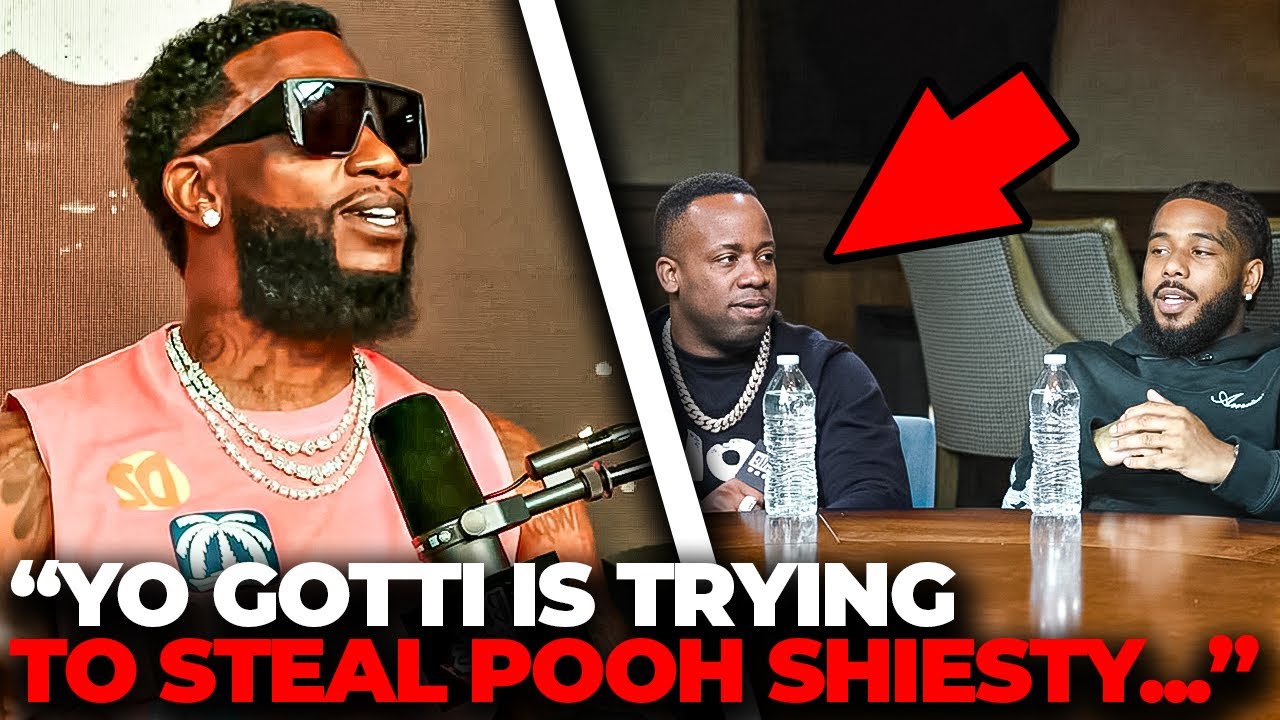 Sources close to both camps confirm tensions are at a boiling point. The conflict centers on Pooh Shiesty, Gucci Mane’s flagship artist on 1017 Records, who was released from federal prison earlier this year. During his incarceration, industry whispers suggested Shiesty was dissatisfied with his contractual situation. Yo Gotti, CEO of the powerhouse CMG label, has since engaged in a very public campaign to recruit him.
Gotti’s social media has featured prominent posts of Shiesty, and he facilitated a collaboration between Shiesty and CMG star GloRilla. This overt maneuvering is widely interpreted as a direct attempt to poach the rapper as his 1017 deal nears its end. For Gucci Mane, this represents a profound violation of street code and business loyalty.
The situation is dangerously personal, resurrecting a bitter feud that dates back over a decade. Gucci Mane and Yo Gotti were once celebrated collaborators, releasing a series of influential mixtapes that dominated the early 2010s. Their friendship fractured irrevocably in 2012 when Gotti scheduled his “CM7” mixtape to release on October 17—a date Gucci had heavily promoted for his own “Trap God” project and which represents his 1017 brand.
The perceived disrespect was compounded when Gotti released a remix featuring Jeezy, Gucci’s arch-rival at the time. Gucci responded with diss tracks, calling Gotti a “buster” and publicly ending their alliance. The animosity deepened to a 𝓈𝒽𝓸𝒸𝓀𝒾𝓃𝑔 degree during a 2013 Breakfast Club interview, where Yo Gotti admitted to a 𝒔𝒆𝒙𝒖𝒂𝒍 encounter with Keyshia Ka’oir while Gucci was incarcerated on a probation violation.

Gotti dismissed the incident casually, stating he was unaware of the seriousness of Gucci’s relationship with Ka’oir, who is now his wife. This betrayal created a wound that never truly healed, making the current business conflict feel intensely personal. Gucci Mane, who transformed his life and career after a 2016 prison release, had largely moved past the public beef, focusing on his label and family.
Pooh Shiesty’s potential defection strikes at the heart of Gucci’s rebuilt empire. After signing to 1017 in 2020, Shiesty quickly became its most valuable asset, with his raw authenticity and 𝓿𝒾𝓇𝒶𝓁 hits generating millions of streams. His 2021 arrest and subsequent five-year sentence paused a meteoric rise, but his release was highly anticipated.
Insiders report that contract renewal talks between Shiesty and 1017 have stalled, with offers presented to the rapper considered significantly below his market value. This financial dispute, coupled with Gotti’s aggressive recruitment, has placed Shiesty at the center of a high-stakes power struggle. His decision will signal where loyalty lies in the modern rap game.

The industry is watching closely, aware this is more than a standard contract negotiation. The shadow of the past hangs over every move. Gotti’s actions are seen by many as a calculated power play, leveraging his stronger current market position against a former ally whose biggest star is in a vulnerable contractual position.
For Gucci, it represents a painful echo of past disloyalty—first the shared release date, then the betrayal with his partner, and now a move on his premier artist. The situation tests his reformed, business-focused persona against deep-seated street principles of respect and retaliation.
The stakes could not be higher. A successful poach by CMG would be a massive coup for Yo Gotti and a devastating blow to 1017’s prestige and bottom line. It could also trigger a wave of artists re-evaluating their own label relationships, shifting the balance of power in Southern hip-hop.

Conversely, if Gucci retains Shiesty, it would affirm the strength of his brand and serve as a powerful statement about loyalty prevailing over business opportunism. However, the public nature of the courtship ensures the rift between the two moguls is now wider and more public than ever.
This conflict underscores a fundamental tension in today’s music industry: the clash between traditional street codes of allegiance and the cold, hard calculus of business advancement. Pooh Shiesty’s choice is not merely a career decision; it is a verdict in a long-running trial between two giants, with the potential to spark consequences that resonate far beyond the boardroom.
As both camps dig in, the atmosphere grows increasingly tense. The history of violence that once surrounded these figures, though in the past, adds a palpable gravity to the dispute. The hope within the industry is that competition remains strictly on the charts and balance sheets, but the rekindling of this particular feud has everyone bracing for what comes next.